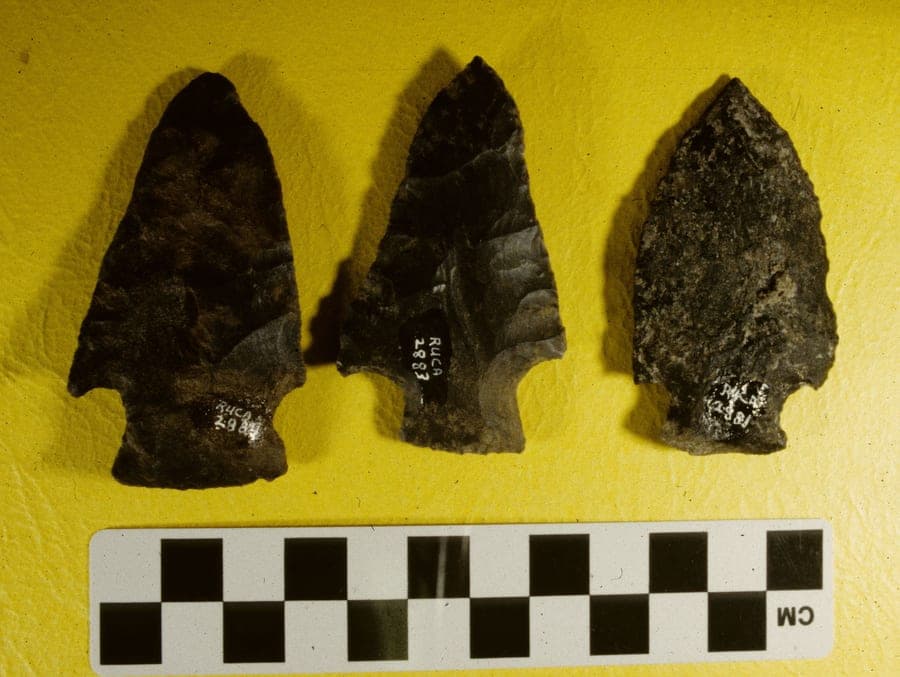
Why Are There So Many Fake Arrowheads?
Modern flintknapping never died — and honest reproductions become fraud the moment they're resold as ancient. How fakes are made, aged, and caught.
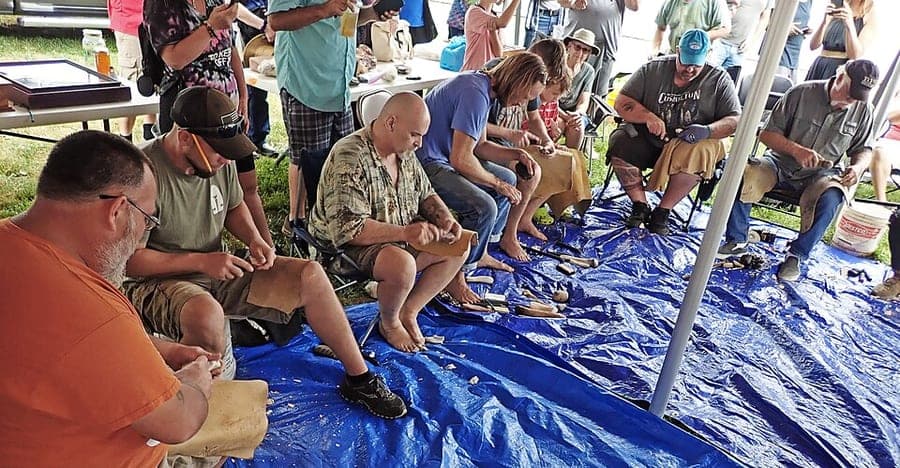
A knapping speed competition at the Coshocton Flint Festival in Ohio. Modern knapping is a living craft with its own gatherings, and the skill on display here is real.
Photo: James St. John · Flickr via Wikimedia Commons · CC BY 2.0
At a glance
- Flintknapping is a living craft with books, videos and annual knap-ins; skilled modern knappers can replicate virtually any prehistoric type.[1][3]
- A reproduction becomes a fake the moment it is sold as ancient — usually downstream of the maker, not by the maker.[2]
- High-demand types attract the most effort: Clovis, Folsom, Dovetails, big corner-notched Archaic blades.
- A photo strips away most physical evidence. Weight, balance and edge wear under a loupe don’t survive a listing.
Spend an evening browsing online artifact listings, or an afternoon at a relic show, and you will look at reproductions. Not might — will. Ask almost anyone who has collected for a decade and they will tell you the hardest lesson of the hobby: modern points outnumber honest ones in many sales channels, and the good fakes are genuinely hard to catch. Understanding why there are so many is the first step to not being fooled by them.
Flintknapping never died
The core reason is simple: the technology that made arrowheads is not lost. Flintknapping — shaping stone by striking and pressing flakes off a core — is a living craft with an active community, instructional books, video tutorials, and annual gatherings called knap-ins.[1] Skilled modern knappers can replicate virtually any prehistoric type, including the hardest ones.[3] Some have spent more hours knapping than many prehistoric specialists ever did.
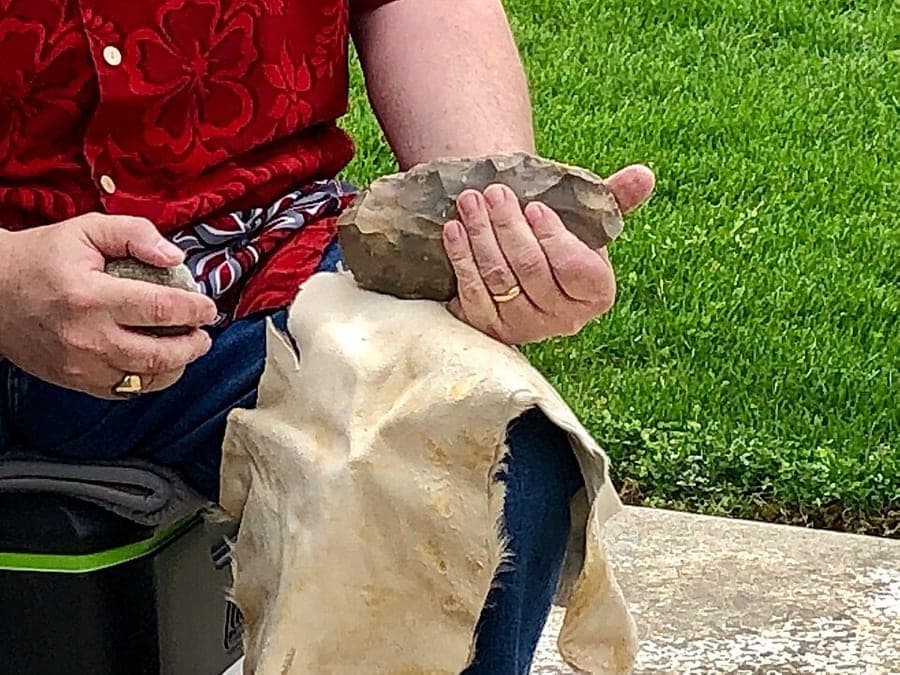
Archaeologist Nicholas Toth knapping a replica handaxe. Experimental archaeologists make stone tools to understand how ancient ones were made — an honest use of the same skill that also produces fakes.
Photo: Kufundisha · Wikimedia Commons · CC BY-SA 4.0
The problem is not the craft. The problem is what happens to unmarked pieces after they leave the maker’s hands.
It’s important to say this clearly: making reproductions is legitimate. Modern lithic art is a real craft tradition, experimental archaeologists knap to understand ancient technology, and most knappers sign or mark their work and sell it honestly as modern. The craft is not the problem.
Where a reproduction becomes a fraud
A reproduction becomes a fake the moment someone represents it as ancient.[2] Sometimes that is deliberate: pieces are artificially aged and sold with invented find stories. Sometimes it is slower and stranger — laundering by time, where nobody in the chain ever meant to deceive.
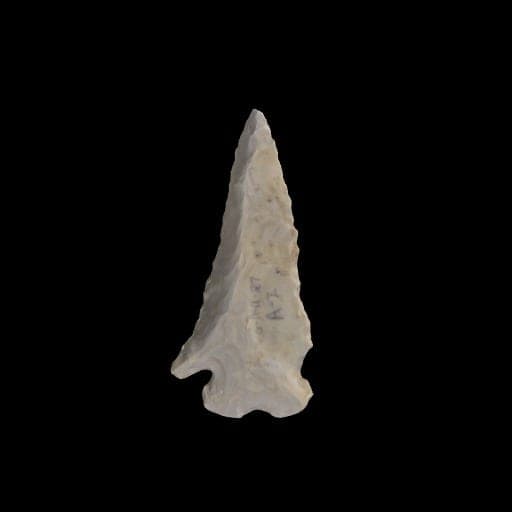
A St. Charles point — the classic “Dovetail.” Big, thin, beautifully made types with devoted followings are exactly where the reproduction effort concentrates.
Photo: Mark W. Moore / Museum of Stone Tools · Museum of Stone Tools, University of New England (Australia) · CC BY 2.0
Deliberate fakers have a toolkit for simulating age: acid baths and tumbling to dull fresh flake scars, staining and burial to mimic soil patina, intentional edge damage to fake use-wear, even re-flaking genuine but broken ancient pieces into more desirable forms. High-demand types with devoted collector followings — Clovis, Folsom, Dovetails, big corner-notched Archaic blades — attract the most effort, because that is where the incentive is.
Why the problem is worse online
Traditional collecting had a built-in defense: you held the piece. Weight, balance, surface feel, and edge wear under a loupe carry real information, and experienced collectors develop calibrated hands. Online sales remove all of it. A photo-only listing strips away most physical evidence, compresses the surface detail that remains, and lets a seller reach thousands of buyers who will never handle the piece before paying.
A field hunter finds a few good points a year. A workshop can produce them by the box.
Volume matters too. When supply is that asymmetric, the fraction of modern pieces in the market only grows — which is exactly what longtime collectors report from decades of watching auction sites.
What honest buyers can do
First, buy the documentation, not the story. A verbal “found on a farm in Tennessee” is worth nothing; old collection labels, field notes, and a traceable chain of ownership are worth a lot. Second, learn the diagnostics of the types you collect — real types have consistent size ranges, base treatments, and flaking styles, and many fakes get the details subtly wrong. Our type guides exist partly for this reason.
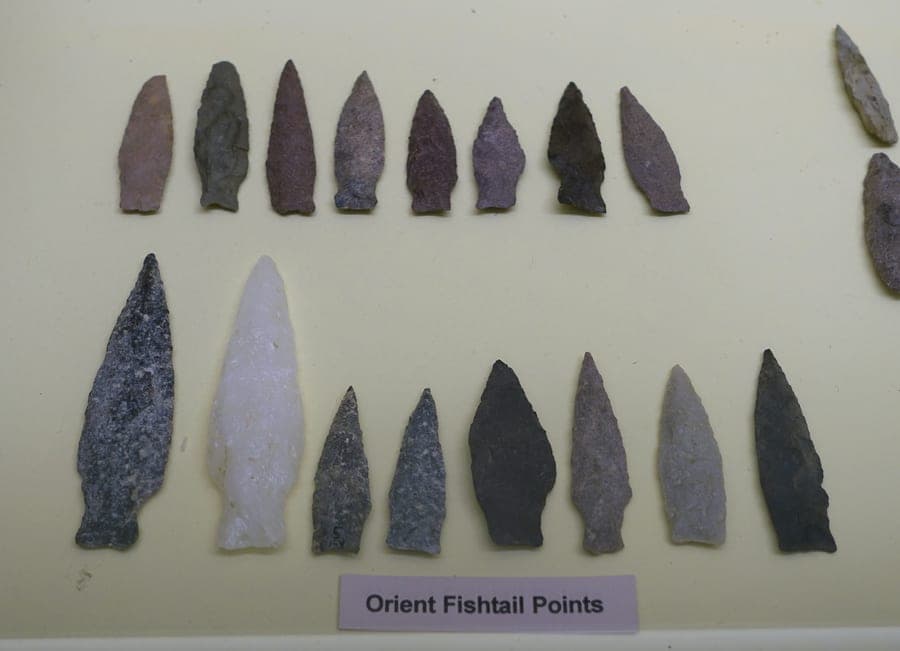
A museum case of Orient Fishtail points. Documented collections carry their history with them; a point that has lost its paperwork has lost its strongest single line of evidence.
Photo: Daderot · Wikimedia Commons (photo taken at Robbins Museum of Archaeology, Middleborough, Massachusetts) · CC0 1.0
Third, use screening honestly. Photo-based review — human or AI — is a real filter for obvious problems and a useful risk read, but nobody can certify authenticity from photos alone, and anyone who claims certainty is overpromising. That is why we publish our measured accuracy numbers instead of guarantees. For a meaningful purchase, stack the evidence: screen first, then insist on provenance, and for high-stakes pieces get a hands-on examination from a professional authenticator.
The reproduction problem isn’t going away — the craft is too alive and the incentive too strong. But it is survivable the way it has always been survived: skepticism, education, and documentation over stories.
Related type guides
Looking at a listing right now?
Run the photos through a Quick Check for a fast, honest risk read before you commit — or get an Authentication Report for a documented report on a serious purchase.
Run a free Quick CheckReferences
- 1.Whittaker, J. C. (2004). American Flintknappers: Stone Age Art in the Age of Computers. University of Texas Press. utpress.utexas.edu
- 2.Whittaker, J. C., & Stafford, M. (1999). Replicas, fakes, and art: The twentieth century Stone Age and its effects on archaeology. American Antiquity. DOI
- 3.Whittaker, J. C. (1994). Flintknapping: Making and Understanding Stone Tools. University of Texas Press. utpress.utexas.edu
Further reading
Keep reading