Folsom Fluted Projectile Point: Identification, Age & Range
Folsom Fluted points date to 10,900-9,500 B.P. on the western Plains — remarkably thin lanceolates with flutes running nearly the full blade face.
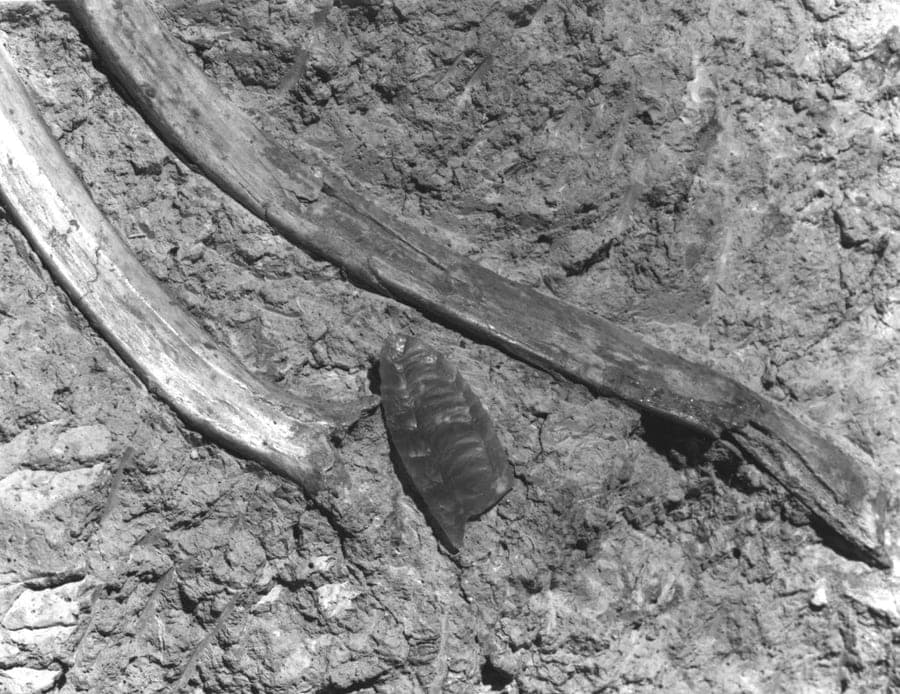
The find that named the type: a Folsom point still in place between the ribs of an extinct bison, photographed during the 1927 excavation near Folsom, New Mexico.
Photo: Unknown photographer, 1927 Folsom site excavation · Wikimedia Commons · Public domain
At a glance
Period
10,900 - 9,500 B.P. · Transitional Paleo
Typical size
22–80 mm long, 13–28 mm wide
Region
This point is primarily found in the western Plains region of the United States and Canada and into the Continental Divide.
The Folsom Fluted point is a Transitional Paleo type dating to about 10,900-9,500 B.P., made by bison hunters on the high Plains at the close of the Pleistocene. It holds a special place in American archaeology: points found at Wild Horse Arroyo near Folsom, New Mexico among the bones of an extinct bison species proved that people had been in the Americas since the Ice Age. Jesse D. Figgins named the type in 1926, and H.M. Wormington later formally described it.
Folsom is widely regarded as the high-water mark of fluting technology, which is why fluted finds from the Plains draw so much attention — and why so many reworked points from other types get mistaken for it.
How to identify a Folsom Fluted point
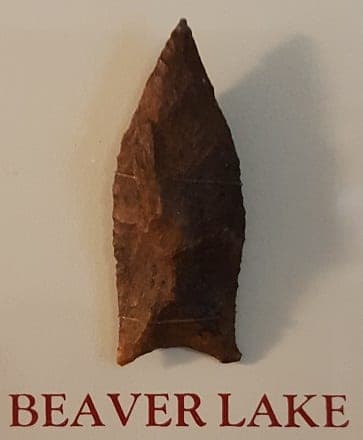
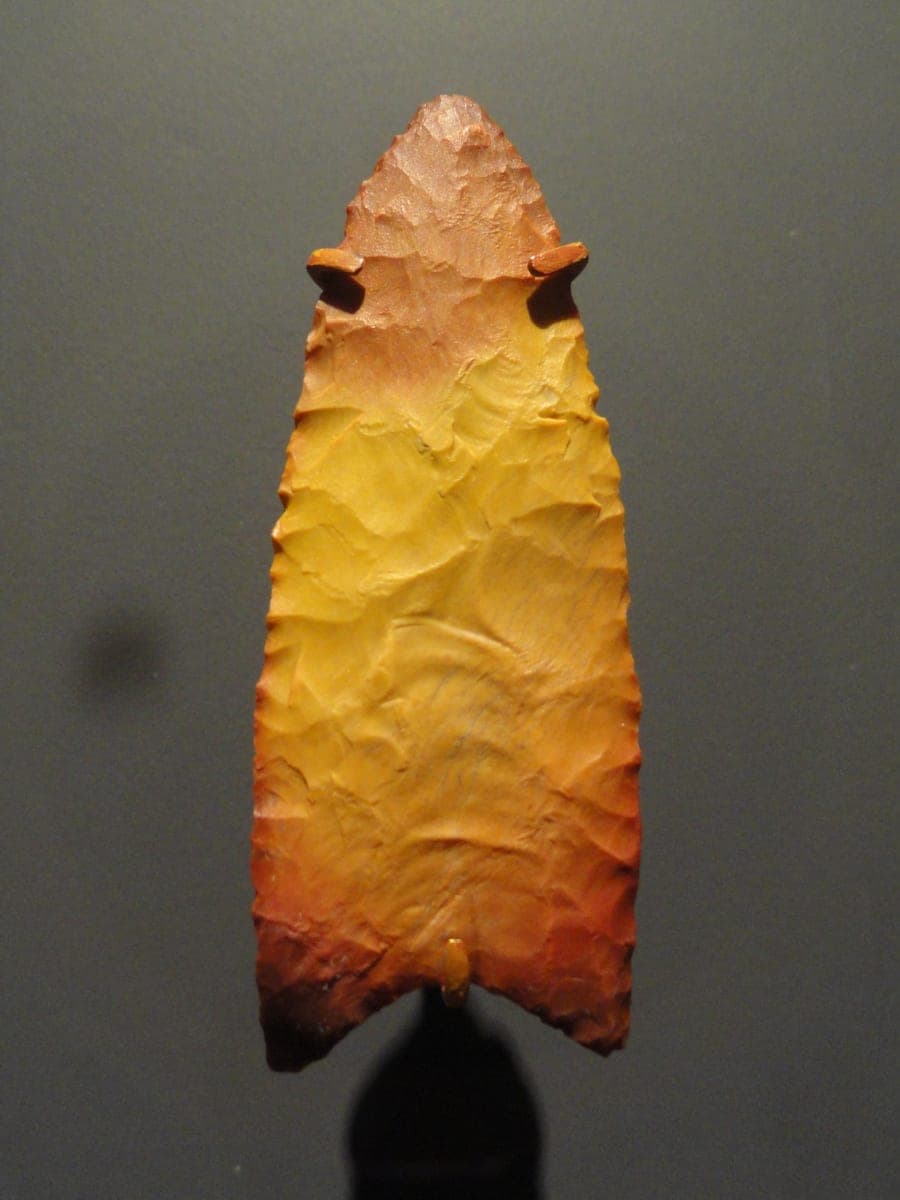
The defining trait is the flute itself. On a classic Folsom the channel runs most of the way up each face — often the full length, rarely less than about sixty percent — leaving a biconcave, almost hollow-ground cross section. The point is astonishingly thin, generally just 4 to 7 mm, and the edges carry very fine, even pressure retouch. Some finished examples retain a tiny nub centered on the base — what is left of the nipple-shaped platform the knapper built to strike the fluting flake.
The outline is a small to medium lanceolate, roughly 22 to 80 mm long (average around 46 mm) and 13 to 28 mm wide. Sides are gently convex to parallel, with the widest point in the upper third to half of the blade, giving many examples a slightly blunt-nosed look. The base is concave — often deeply so — and small ears may flare at the corners. Expect heavy grinding on the base and lower edges. Makers favored high-quality local cherts and did not heat-treat the stone.
The most common false positive is a resharpened point from another fluted type: as a blade shortens with reuse, the flute-to-blade ratio grows until the channel appears to span the whole face. When in doubt, judge by thinness and the delicacy of the edge retouch — Folsom stands out on both.
Age and where it's found
Folsom dates to roughly 10,900-9,500 B.P., in the Transitional Paleo period of the late Pleistocene. Its distribution tracks the range of Pleistocene bison, and in controlled excavations it never occurs mixed with older Clovis material or with later Cody Complex points.
The heartland is the western Plains, from the U.S. north into Canada and west to the Continental Divide. Finds taper off westward into the Great Basin and eastward toward the Great Lakes. A fluted point found in the eastern woodlands is far more likely to be a Clovis or Cumberland than a true Folsom.
Think you found a Folsom Fluted?
Upload a photo and our shape-matching AI will compare it against 1,000+ documented point types — with an honest read on how well it fits.
More type guides